
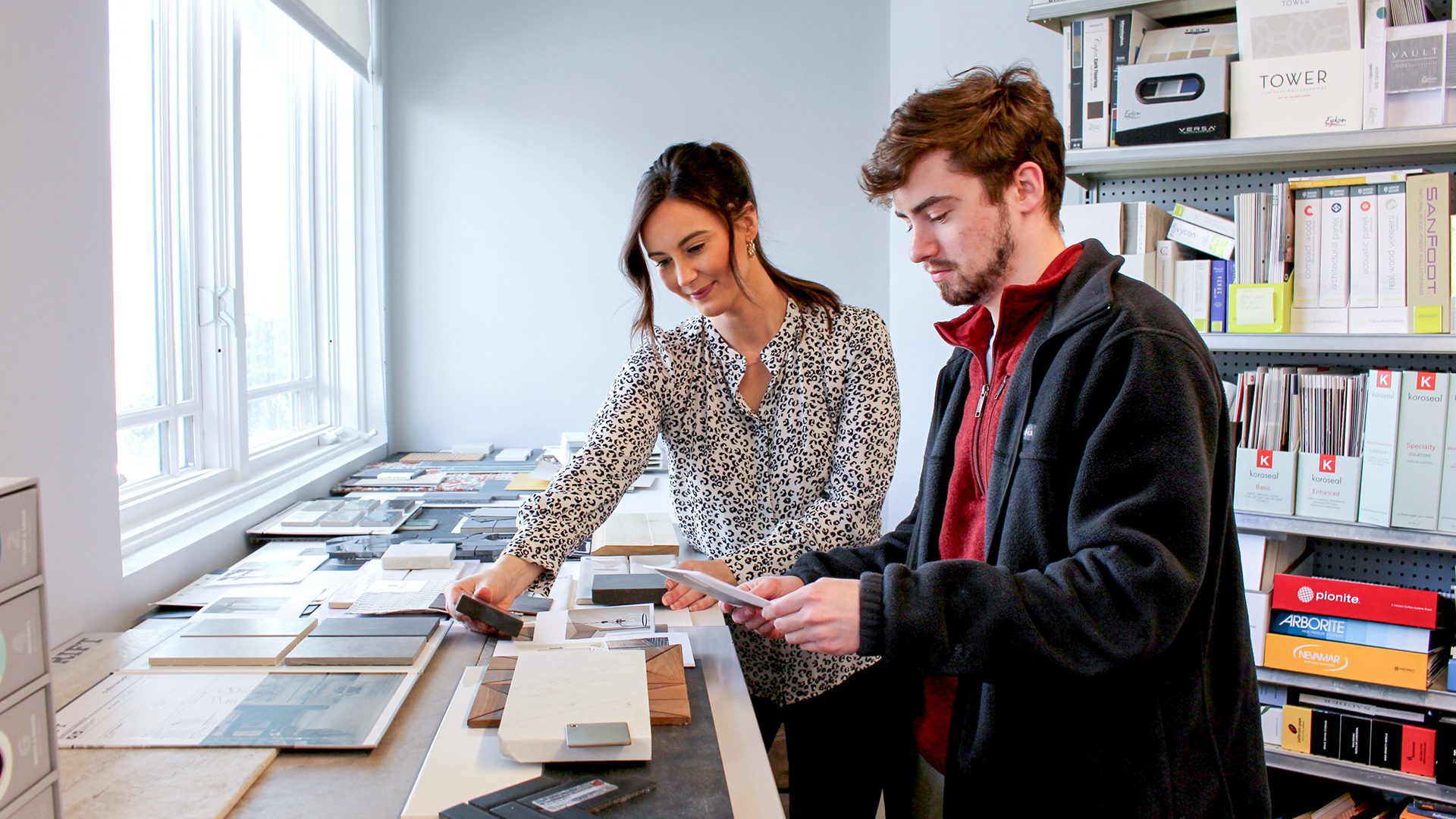
How We Bring Branding to Life Through Interior Design in Commercial Spaces
The term “branding” is often closely associated with marketing and graphic design, and may evoke thoughts of logos or social media influencers — but it’s also an important concept in the architecture and interior design of commercial spaces.
To quote Paul Rand, “Design is the silent ambassador of your brand.” From an entryway and signage to lighting, materials, and furniture, the physical space a business occupies can be one of the most powerful ways to communicate its brand. Let’s explore why…
Why is Branding Important in Architecture & Interior Design?
Far beyond logos, branding is the impression a company creates (by design!) for its consumers and even employees. In commercial architecture and interior design, we leverage branding to instantly communicate brand identity and values and to support a positive user experience.
If we do our job well, when a customer, patient, or employee walks into a commercial building or designed space, their first impression is brand-aligned and enhances their overall perception of the company. Then, consistent branding throughout the commercial space continues to reinforce that positive perception and enhance the user experience.
As commercial architects and interior designers, we understand that every material, fixture, and spatial decision plays a role in reinforcing a business’s brand identity. From wayfinding strategies to custom millwork, branded design is foundational to the spaces we build.
Let’s take a high-level look at how team Ewart brings branding to life in the built environment:
4 Ways Our Architecture Firm Integrates Branded Designs
Design is always about both function and form — and branding can play a role in both. Here are a few key ways we integrate effective branding into our architecture and interior design services across many industries, including retail, hospitality, healthcare, and more:
Color Palette Choices
In commercial interiors, color selection can influence behavior and mood, making it a strategic component in everything from healthcare waiting rooms to retail display areas. A thoughtful and consistent color palette in a commercial setting can reinforce brand recognition, create a sense of cohesiveness within the space, and evoke emotional responses in building occupants.
As an example, you can see how our designers implemented a calming, child-friendly color palette in our interior design work for GI for Kids in Knoxville to reflect the brand’s welcoming, patient-first approach to pediatric healthcare.
Materials, Textures, and Patterns
Beyond color, the materials, finishes, and textiles used throughout a space play a big role in expressing brand identity. Material selection isn’t just an aesthetic decision; it’s a storytelling tool. The right combination of textures, patterns, and surfaces can make that message instantly clear — without a single word.
It’s important to ask yourself: Are you aiming for something sleek and high-end, playful and kid-friendly, or warm and utilitarian? Durable, high-traffic finishes might communicate practicality and resilience, while unexpected textures or bold patterns can signal innovation, creativity, or luxury. In branded environments, even the smallest surface detail helps shape how people experience and remember your space.
Check out how our talented GAEA interior designers used colors, patterns, and textures to capture the essence of the unique Pizza Rio brand in Pigeon Forge, Tennessee.
Signage and Visual Storytelling
Even though it’s one of the more overt aspects of branding, the use of effective signage shouldn’t be minimized because it feels like a given…
In a well-designed commercial space, signs do more than direct; they contribute to the overall brand experience and help reinforce recognition at every turn. That means signage should be eye-catching, easy to understand, and consistent with the brand’s visual identity.
Depending on the brand, visual storytelling may also play a role in the physical space. This can be as direct as an illustrated timeline highlighting the company’s history, or more abstract — expressed through imagery, lighting, or curated moments that reflect the brand’s personality and values.
Team Ewart’s work on the interior design for the Smith Creek Moonshine retail space is a fun example of visual storytelling on behalf of another East Tennessee brand.
Strategic Layouts Based on the Brand’s Needs
The functionality and layout of a space can say a lot about what’s important to a brand and those it serves, shaping how customers, patients, or employees feel within it. A well-planned layout doesn’t just serve one purpose — it reinforces the brand’s priorities and needs through everyday interactions.
For example, an open office layout might reflect a brand’s emphasis on transparency and collaboration, while cozier, more private workspaces could speak to a focus on comfort, quiet, or individual productivity. These design choices aren’t just practical; they communicate something deeper about the company’s culture and intent.
In team Ewart’s work with TN Cancer Specialists, our architects designed a unique layout reflecting the brand’s many years of experience and the high value they place on providing high-quality compassionate care to East Tennessee cancer patients.
Join a Creative Architecture & Design Team in Knoxville
If you’re a creative architect, interior designer, or project manager who’s passionate about topics like branding in the built environment, we’d love to hear from you. We’re always open to connecting with like-minded professionals who value great design, thoughtful collaboration, and making a difference in East Tennessee communities.
Reach out on our site or email us at info@georgeewart.com to see if an architecture, interior design, or administrative role with our firm in Knoxville is right for you!